
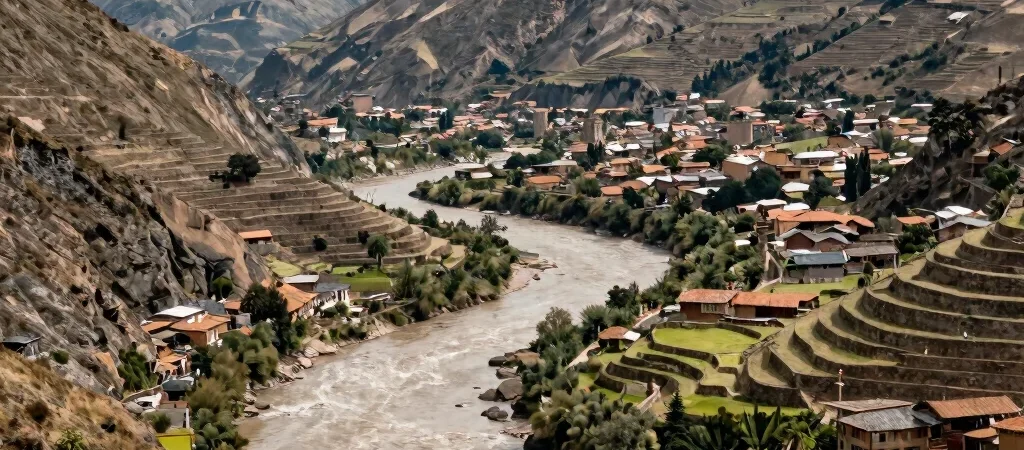
From the road, the Urubamba River can look like a guide line: follow its bends through the Sacred Valley and onward toward the mountains. But the valley is not simply a passage between Cusco and elsewhere. Its settlements, fields, and steep changes in elevation reward a slower reading.
Let the elevation change gradually
Cusco sits higher than many of the valley’s towns, and that difference shapes how a day on foot may feel. A gentle-looking route can still ask a lot of a body adjusting to altitude. Build in time to rest, pay attention to how you feel, and check local guidance before planning strenuous walks.
Follow the river, notice the fields
The Urubamba runs through a landscape worked as well as admired. Terraces climb slopes where the ground permits, while cultivated plots and settlements gather along more accessible stretches of land. At places such as Pisac and Ollantaytambo, archaeological remains sit within living towns and working landscapes, not apart from them.
Make room for a slower day
Instead of treating every stop as a quick pause before the next landmark, choose one town or stretch of riverbank to understand on its own terms. Ask before photographing people, respect marked boundaries, and check current conditions before setting out on a trail. In the Sacred Valley, a little more time on the ground changes what the route means.